Writing by Mimi Park
If we look back at our own history of looking at art, we might find a few or several important moments in our lives. Let’s call them “art moments.” They are the moments when you feel something so intensely that your life changes slightly(or immensely) right then. And there are “abstract art moments.” Obviously “art moments” can include “abstract art moments,” but “abstract art moments” do have their characteristics and consequences that are distinguished from other “art moments.” We tend to experience our first art moments when looking at figurative work. Then, we have these moments when we look at abstraction. Let’s say we look at a Cubist painting or Malevich’s square for the first time and feel confounded. They are different moments from when we feel awe looking at the grape paintings of Juan Fernández.
I had a few “abstract art moments” myself in my life. One of those moments was when I first looked at Cy Twombly’s. I was confounded and disturbed by his lines and forms being so a-formal, so completely free. Then these nearly non-forms evoked so much sensation in me. When I was staying in Umbria, Italy—it was about twenty years ago— for a summer residency; I had a copy of Roland Barthes with me. There was a chapter on Twombly’s art. In that essay, Barthes used the term “the Rare” in describing Twombly’s canvas. (“‘Rarus’ in Latin means that which has gaps or interstices, sparse, porous, scattered.”) The Rare Rectangle of Twombly, Barthes went on, carries two civilizations simultaneously; one is the void in Eastern art, the other the Mediterranean space of its skies and ocean.(Twombly was a famous American expat in Italy; he lived in several places in the Mediterranean and Rome) Coming from the Eastern culture, I thought I understood the void of Eastern art, and now I had to go see the Mediterranean equivalent. Instead of going to Firenze or Venice, I embarked on a long journey, without much hesitation, to one of the islands in the Bay of Naples to ambitiously witness the Mediterranean Rare.
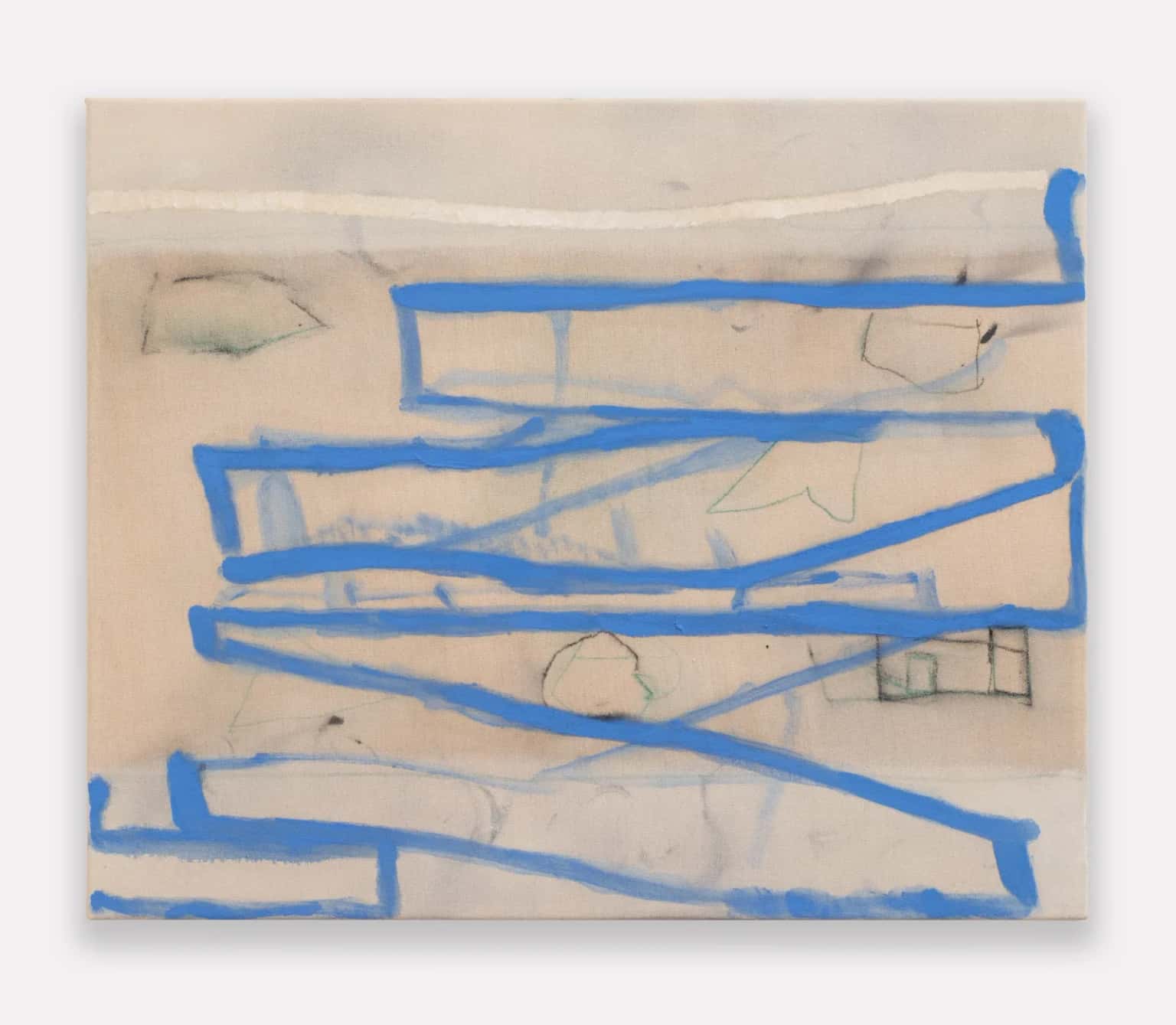
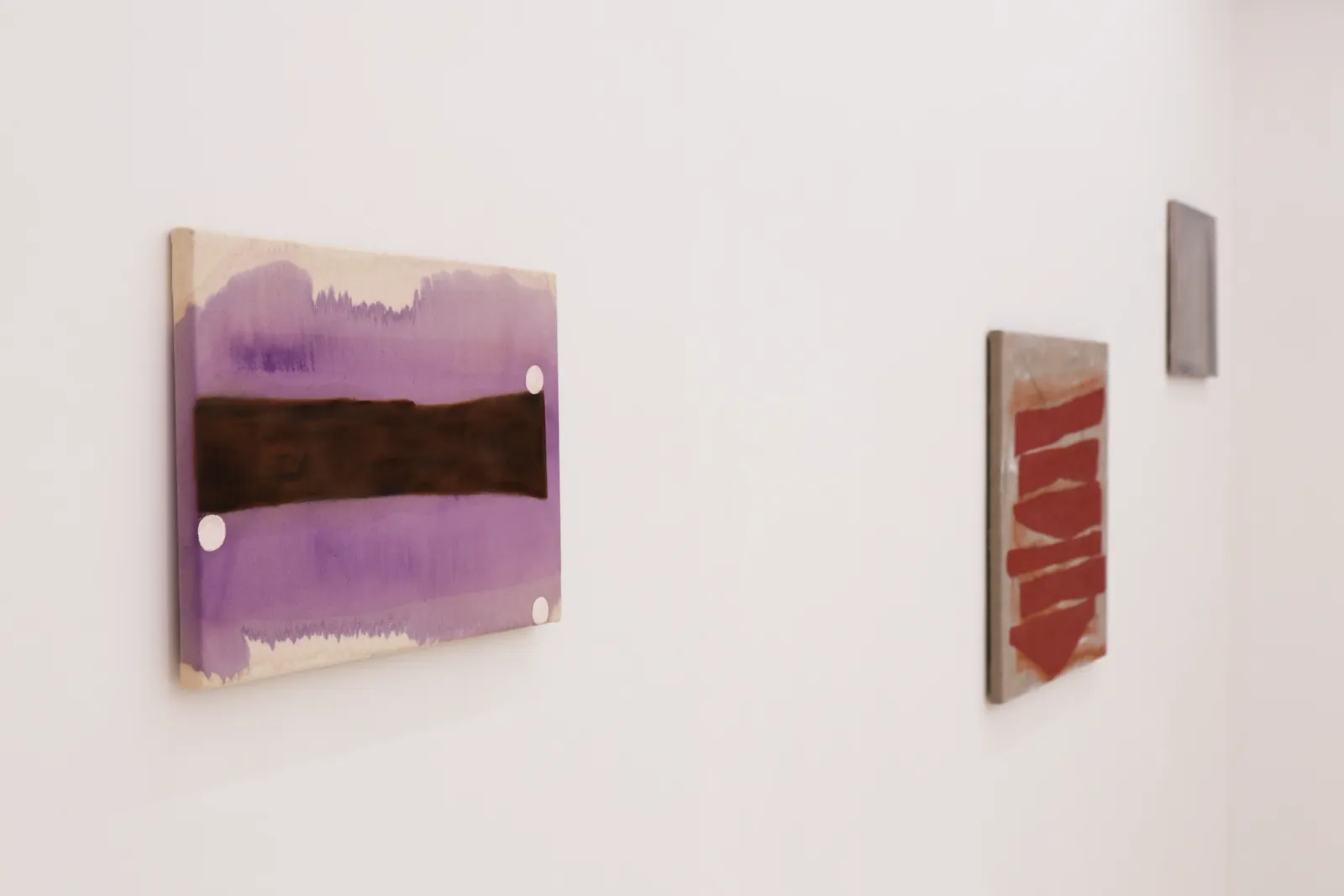
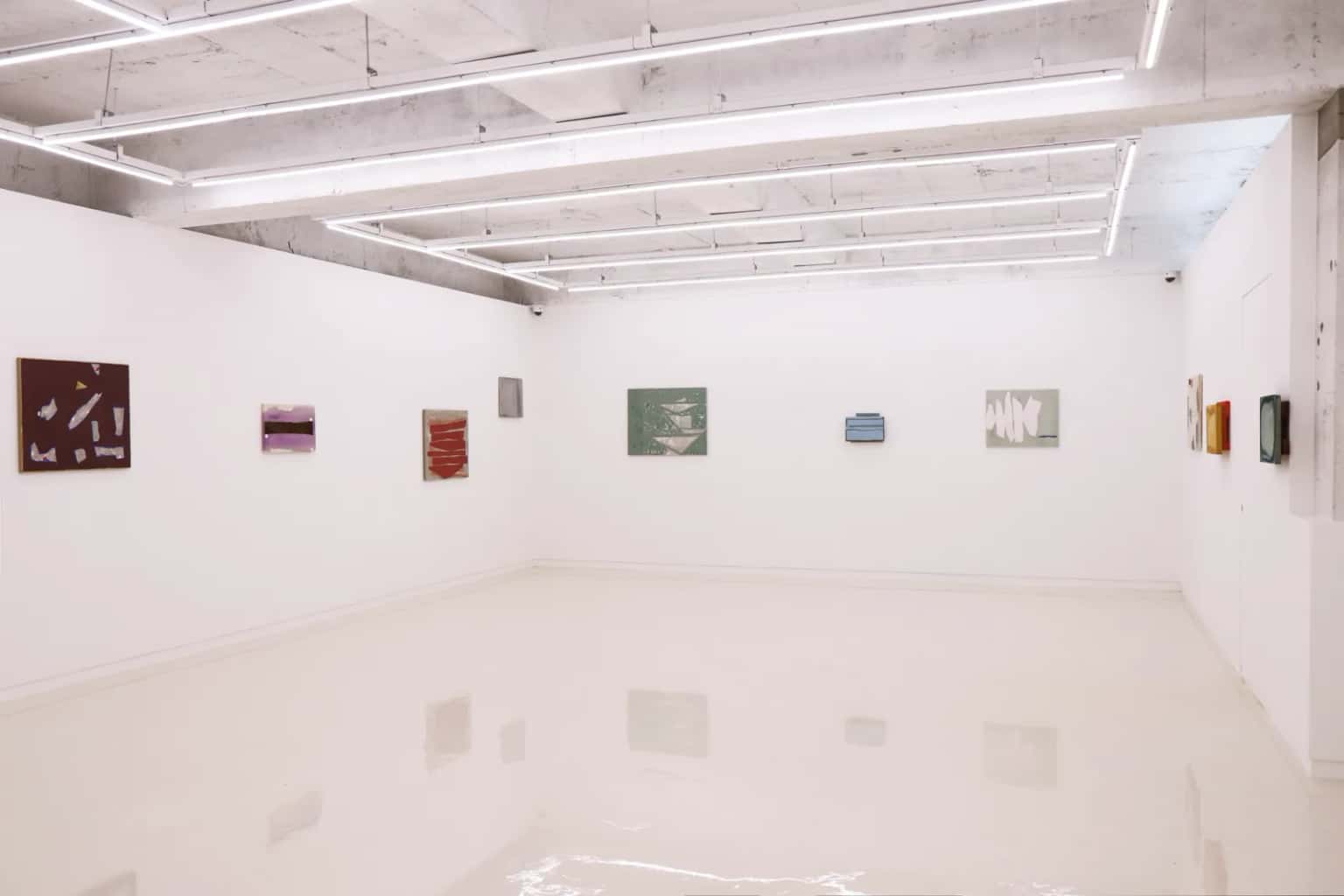
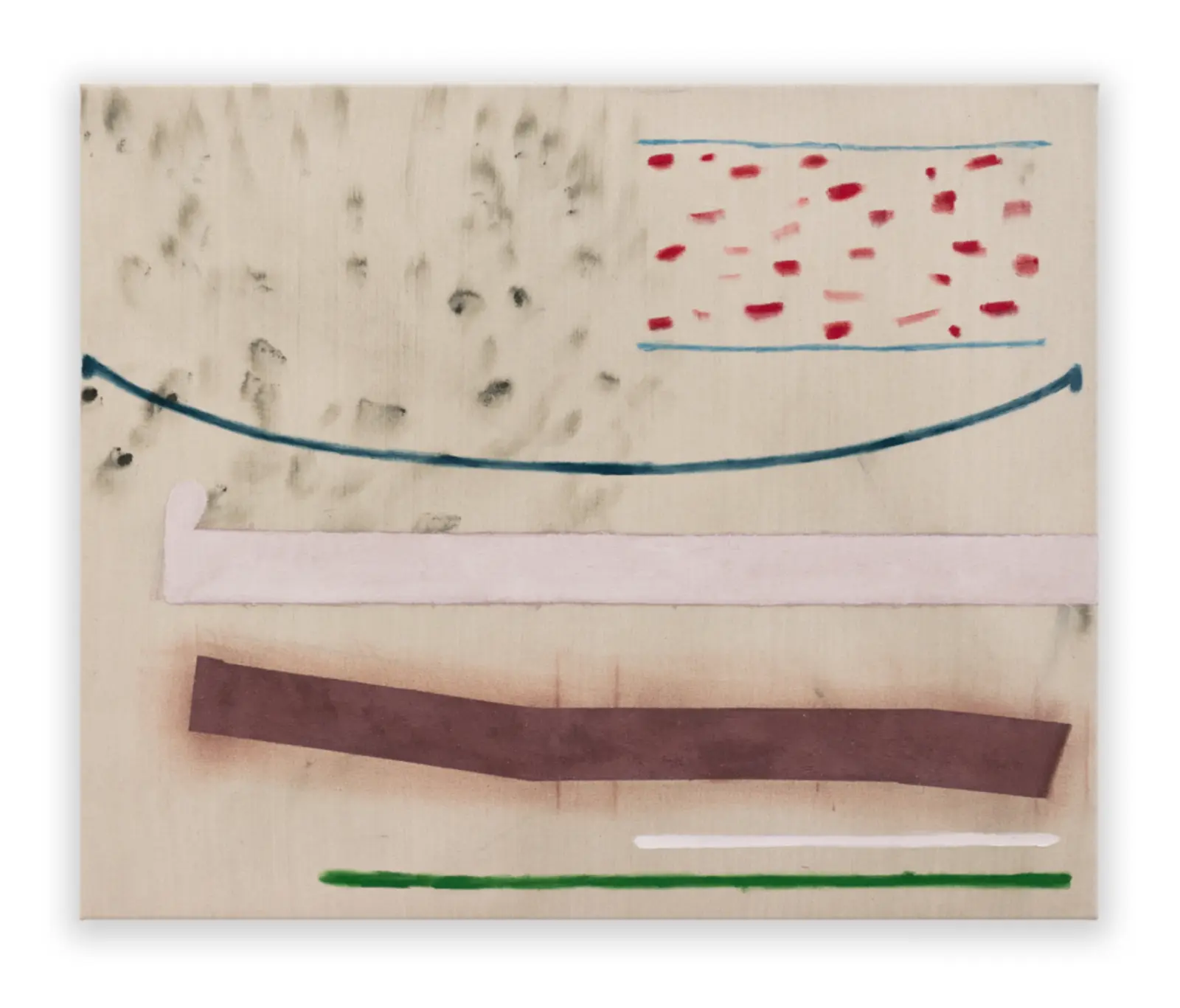
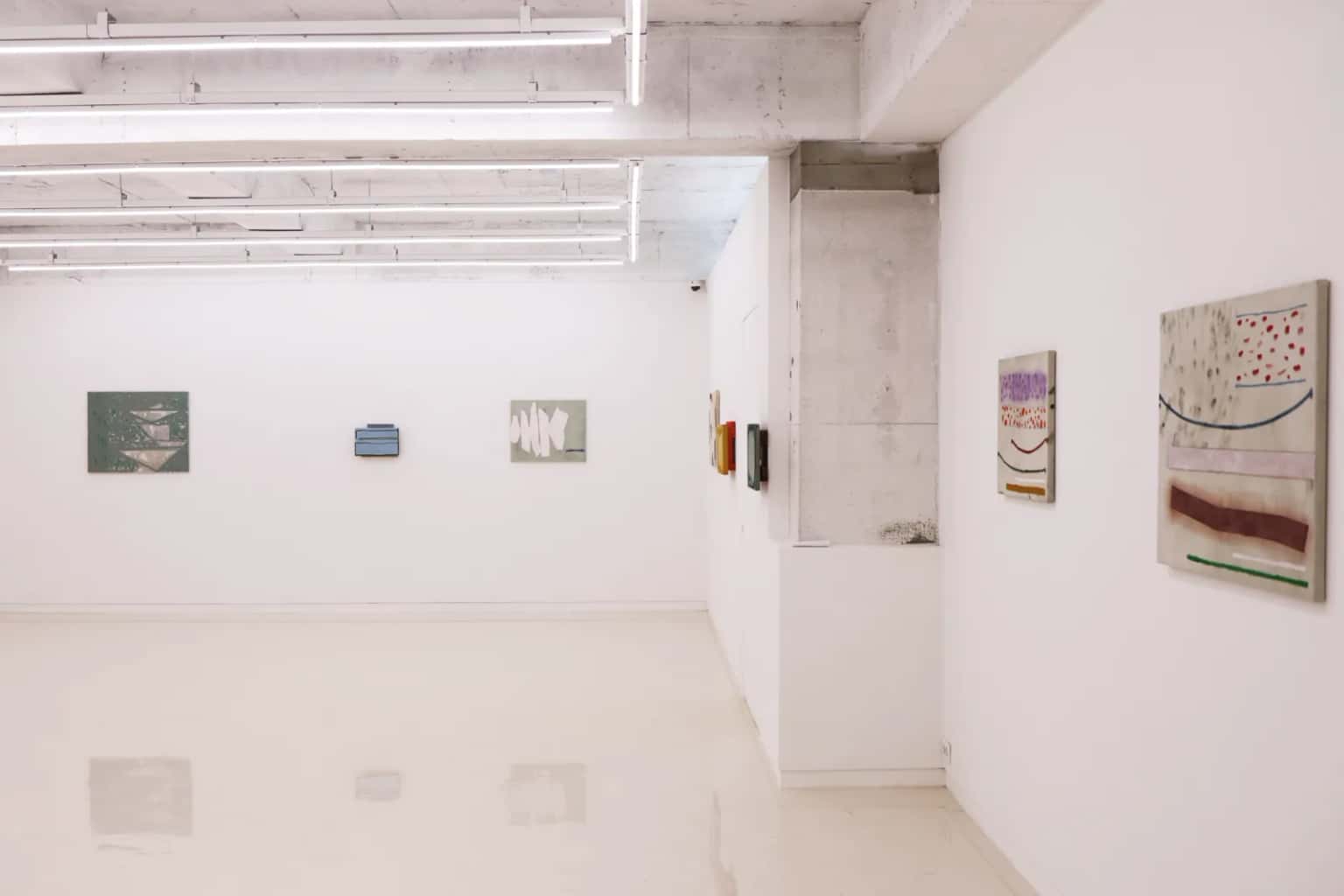
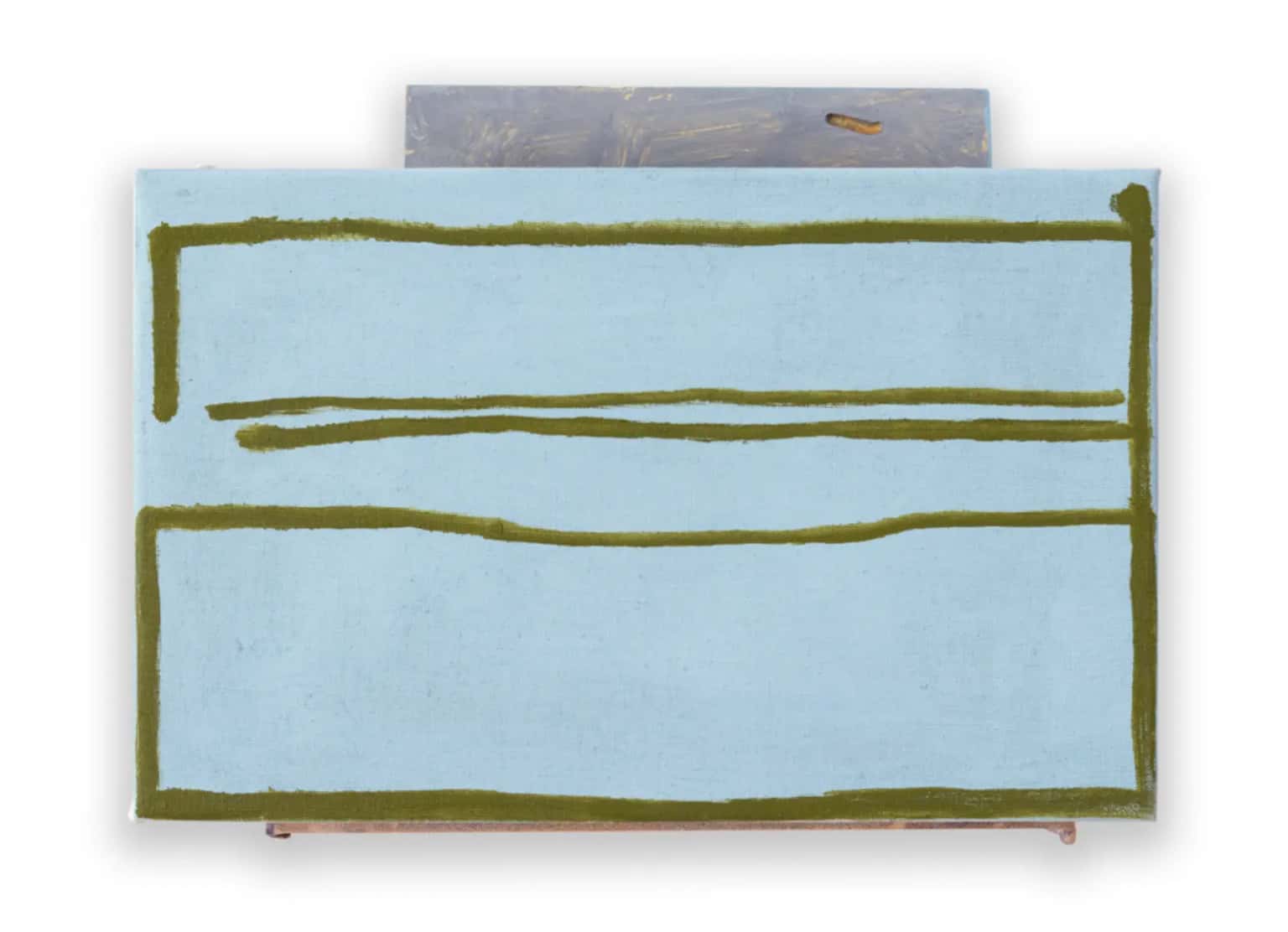
Last April, I flew to Madrid-Bilbao, Spain, to visit Patrick Michael Fitzgerald’s studio. I had been looking at his paintings on Instagram before I finally decided to go there. It is probably a similar impulse that moved me to the Bay of Naples some twenty years ago. How can one understand one’s art without having some understanding of where it was made and how? And Fitzgerald’s painting had a sense of “the Rare,” though his “rareness” is quite different from Twombly’s. First of all, Fitzgerald’s canvases are never as big as Twombly’s. He only works on modest-sized canvases; little foreground forms in his paintings can never be spaced out like the ones in Twombly’s. Sometimes, his canvas is even packed with little dots or lines. Then why did I think the Rare or the sparseness in his painting reminded me of Twombly’s?
Patrick Michael Fitzgerald was born in Cork, the second largest city in Ireland, grew up in different places in the UK, went to Chelsea School of Art in London, and has lived for over 30 years in the outskirts of Bilbao.... Though Bilbao has been a destination for art people since the Guggenheim museum opened in 1997, it still feels like an odd place to be for a serious artist. He says he works in “relative isolation.” Though isolation is one of the very conditions of being an artist, his “relative isolation” rings a different tone because he lives in a small town in Spain, not an art capital or an exotic island, as an emigre.
Great artists are masters in living in isolation; on top of that, they are often exiles and emigres. When you are first “displaced” in a foreign place, you would feel literally uprooted. The profound sense of “nothingness” of your existence will be faced. Since you have no context, you might try to find any vestige of your root in yourself. As I was trying to think of Fitzgerald’s Irishness, his root, I was looking at the photos of Ireland he sent me(where I could recognize some colors and voids in his paintings); I scanned through Irish artists. I came all the way to Spain to meet this Irish artist, who seemed like a guy around the corner in Brooklyn. I couldn’t really pinpoint Fitzgerald’s Irishness in his work, as they often say it is hard to find it in Samuel Beckett’s work. In fact, Fitzgerald’s painting has the kind of “spareness” that you might find in Beckett’s. Beckett was an exile all his life, via London, and lived in Paris until the end. He was an outsider even in Ireland, being a protestant from a modestly affluent family in a Catholic and poor country. When you read a part like this from a story called Lessness(1969), look at the use of words, and hear the sound of it, you might find a connection between these two exiles.
Scattered ruins same grey as the sand ash grey true refuge. Four square all light sheer white blank planes all gone from mind. Never was but grey air timeless no sound figment the passing light. No sound no stir ash grey sky mirrored earth mirrored sky. Never but this changelessness dream the passing hour.
Fitzgerald’s work defies the conventional structure of painting or painted objects, following its own rhythm and sound, never attempting to deliver a “great” agenda. The forms in his painting seem never quite certain about their existence, hovering and searching in unknown space. There are often many layers of painted and erased forms. Their role appears to be about asserting “less,” as if it would make them exist more. Hugh Kenner once said of Beckett, “He is the non-maestro, the anti-virtuoso, habitué of non-form and anti-matter….” Going against what James Joyce was about, “knowing everything,” Beckett intentionally chose to be “not knowing.” I wonder if Fitzgerald ever carries as much intention as Beckett.
Fitzgerald’s studio was in a little town called Zalla, where we went by bus from Bilbao. Bilbao is a port city in the Basque Country in Northern Spain, situated in a low altitude surrounded by mountains. From Bilbao to Zalla, we passed the mountainous area with a great vista of green and skies. The hills were not high but rocky, which made me feel precarious as if we were driving on the narrow edge of something. I was in his studio looking around, thinking his studio felt more settled than anybody’s home in that town, and at the same time, felt like “nowhere”independent from the world outside. And it was the perfect place to recall the great observation by Terry Eagleton in Exiles and Emigre(1970).
Great art is produced not from the simple availability of an alternative but from the subtle and involuted tensions between the remembered and the real, the potential and the actual, integration and dispossession, exile and involvement.